ZQ Gallery presents a new body of paintings by Fatima Faisal Qureshi, which opened on 19 September.
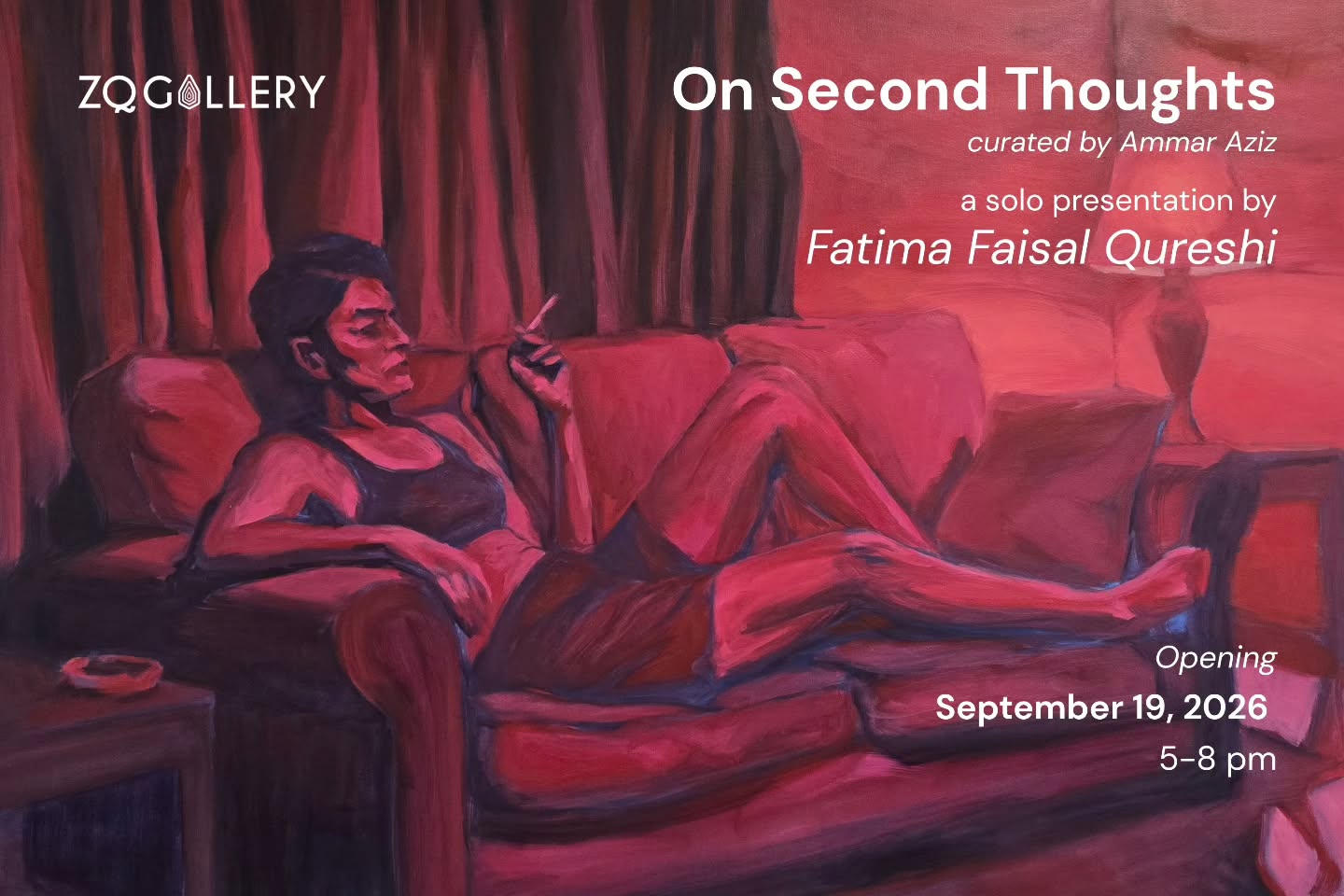
There are rooms in which nothing happens, and yet something has already happened: a semi-naked person remains on a sofa; another indifferently poses in a drawing studio where the painting behind her seems more alive despite being less visually detailed. A man looks into the mirror. The scenes appear ordinary, almost tender, until one begins to sense the sadness within them.
In Qureshi’s new paintings, intimacy is rarely the same thing as proximity. Her figures inhabit shared spaces while remaining suspended in their own loneliness.
Faisal has long been interested in the body as a means of investigating vulnerability and desire. Her earlier paintings often brought bodies into their natural, unveiled state, challenging the expectations of the cis-het male gaze. The nude in her work has been neither simply erotic nor merely vulnerable, but caught between the desire to be seen and the instinct to withdraw. In this new body of work, that tension becomes subtler and, perhaps, more intimate. The body no longer announces itself. It lingers.
There is something almost Chekhovian: the drama lies not in what is declared, but in what remains unsaid. Like the quilt in Ismat Chughtai’s Lihaaf, intimacy can remain partly concealed—not because it is absent, but because language, convention and the social gaze are inadequate to it. What is hidden consequently acquires a strange intensity.
In a manner reminiscent of @Amit_Chaudhuri’s attention to the uneventful and the everyday, Faisal locates the most private dramas in rooms where, on the surface, nothing much happens.
Lastly, Faisal’s figures seem to exist in a nocturnal solitude, an intimate otherness. Her paintings are not just portraits of loneliness but studies of the private life that aloneness makes possible. A separation, hijr, that often exists despite the communion, visaal. The ability to portray this dialectic makes Faisal stand apart from her contemporaries.
— Ammar Aziz